This week, two more independent festivals announced they won't be running in 2026. That brings the tally to over a dozen lost in the past decade: Body & Soul, Indiependence, Life Festival, Sea Sessions, Vantastival, Dalriada, Sunflowerfest, Knockanstockan, Wild Roots, Sounds of the Shore, Willowstone, PigStock, Tanglewood.
Stendhal is still going. A few others cling on. But the trend is clear.
The conversation usually stops at Live Nation — the $23bn global giant whose associates run Belsonic, Emerge, Custom House Square, and a chunk of the SSE Arena and Telegraph Building programming. When one company controls that much of the market, independent promoters struggle to compete.
That's real. But it's only half the story.
The Other Half
The other half is what happens at the venues that should be the antidote to monopoly — the independent bars, arts centres, and small halls that exist to give artists a platform.
They're not taking chances either.
We've spent months pitching shows across Belfast. The response is almost always the same:
"We don't feel you're in a position to sell that volume of tickets."
"Come back when you've got a track record."
"Have you tried somewhere smaller first?"
The logic is understandable. Venues need to cover costs. They can't afford empty rooms. But the effect is a closed loop: you can't get booked without an audience, and you can't build an audience without getting booked.
The Numbers
Northern Ireland spends £5 per head on the arts. The Republic spends £20.
That gap shows up everywhere — in the festivals that close, in the venues that won't take risks, in the young musicians who never get a shot.
It also shows up in the hoops you have to jump through. Want to book a venue for an under-18 artist? That's £750 extra for insurance and safeguarding measures. Want a headline slot? Prove you can sell 200 tickets first. Want support for promotion? That's on you.
The system is designed for artists who've already made it. Everyone else is on their own.
The Catch-22
Here's what it actually looks like to be an emerging artist in NI:
Step 1: Approach venue.
Step 2: Venue asks for evidence of ticket-selling ability.
Step 3: You don't have evidence because no one has booked you.
Step 4: Venue suggests you "build a following first."
Step 5: You can't build a following without gigs.
Step 6: Return to Step 1.
Some artists break out of the loop through connections, money, or sheer persistence. Most don't. They play a few open mics, get discouraged, and stop. The talent was there. The platform wasn't.
What Would Help
This isn't a plea for handouts. It's a call for the ecosystem to function properly.
Venues: Book acts before they're a sure thing. Take a chance on a Tuesday night. Programme one "unknown" slot per month. The acts you back early will remember you when they're selling out bigger rooms.
Audiences: Show up for names you don't recognise. That's how you find your next favourite artist. If you only go to gigs where you know every song, you're part of the problem.
Government: Match the Republic's arts funding. £5 per head isn't enough to sustain a grassroots scene. The creative industries bring £7.6bn into the UK economy — but only if there's a pipeline of talent coming through.
Promoters: Create pathways. Support slots for local acts. Showcase nights. Anything that gives emerging artists stage time in front of real audiences.
What We're Doing
We're not waiting for permission.
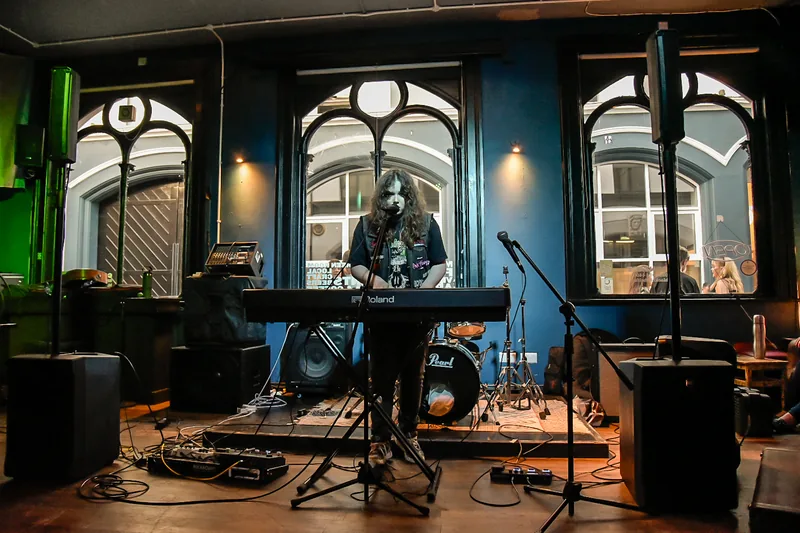
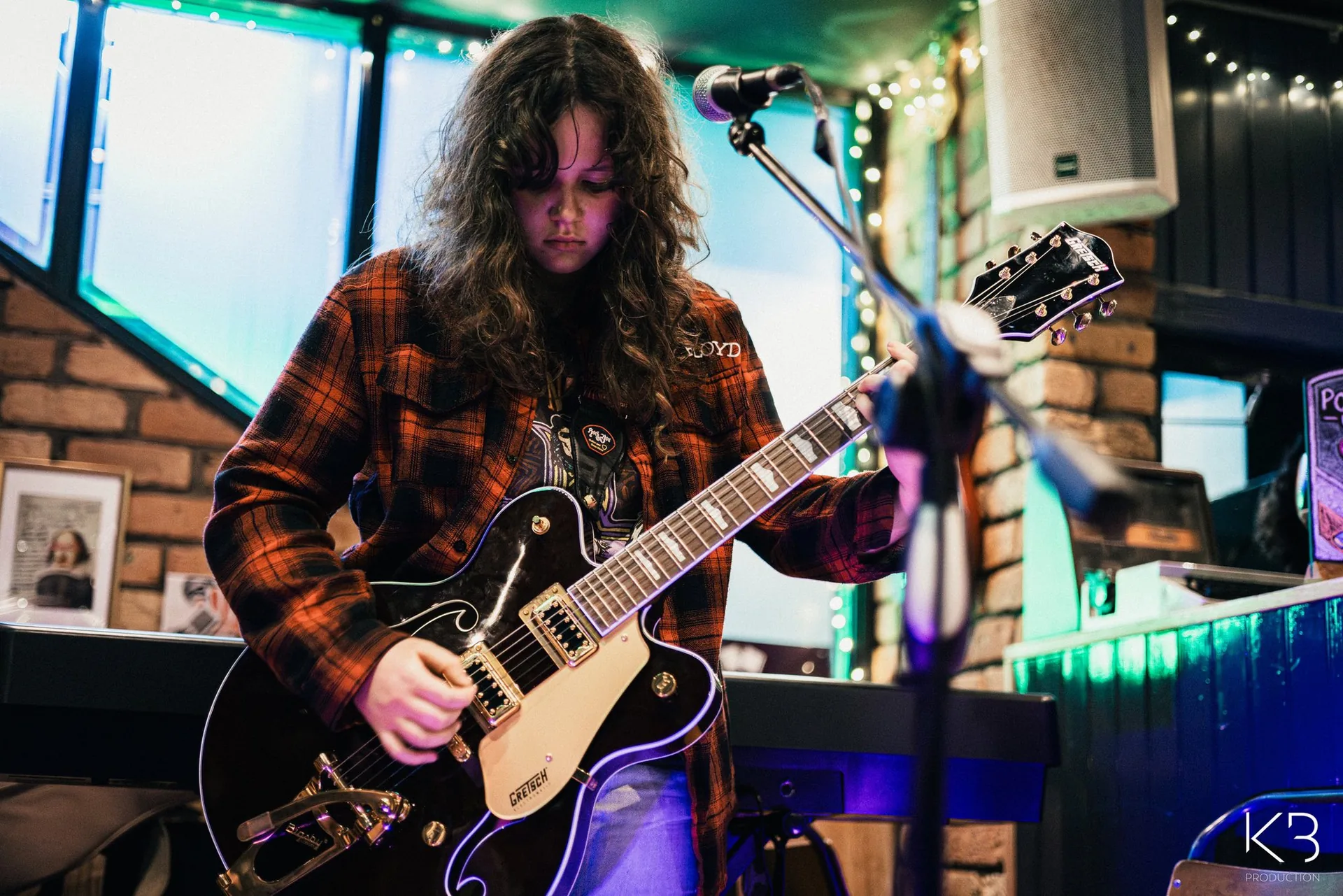
Mia is 16. Trinity-certified. Fronting a 3-piece band with multiple show concepts — from Baroque to Rock (400 years of music in one set) to Radio in Chains (Radiohead meets Alice in Chains, stripped back hard rock).
Achieving that sound—getting a 16-year-old on stage to sound like Layne Staley or high-era Radiohead without a million-dollar budget—required a revolution of its own. It's what we call the Democratisation of Tone.
We've booked 7 shows for 2026: Union Bar, Oh Yeah Centre, Black Box, The Portico, Belfast Barge. Every one of them was a fight. Every one of them required us to prove ourselves before we'd even played.
We also opened our studio once a week for young musicians on the Ards Peninsula who don't have access to instruments or space. Because the phrase on our website — "Music is Not a Privilege, It's a Right" — shouldn't just be a slogan.
The Call for Evidence
The UK Government's Call for Evidence on Live Music closes Friday, 23 January.
This is your chance to tell them what's actually happening on the ground. The festivals closing. The venues playing it safe. The artists stuck in the loop.
Evidence can be submitted anonymously.
If you've got a story, tell it.
Mia Nesbitt is a 16-year-old guitarist and pianist from Northern Ireland. Her 2026 tour includes Oh Yeah Centre, Black Box, The Portico, and Belfast Barge. Learn more at miabella.uk
#SupportIndependentFestivals #LiveMusicMatters #CMAInvestigation