
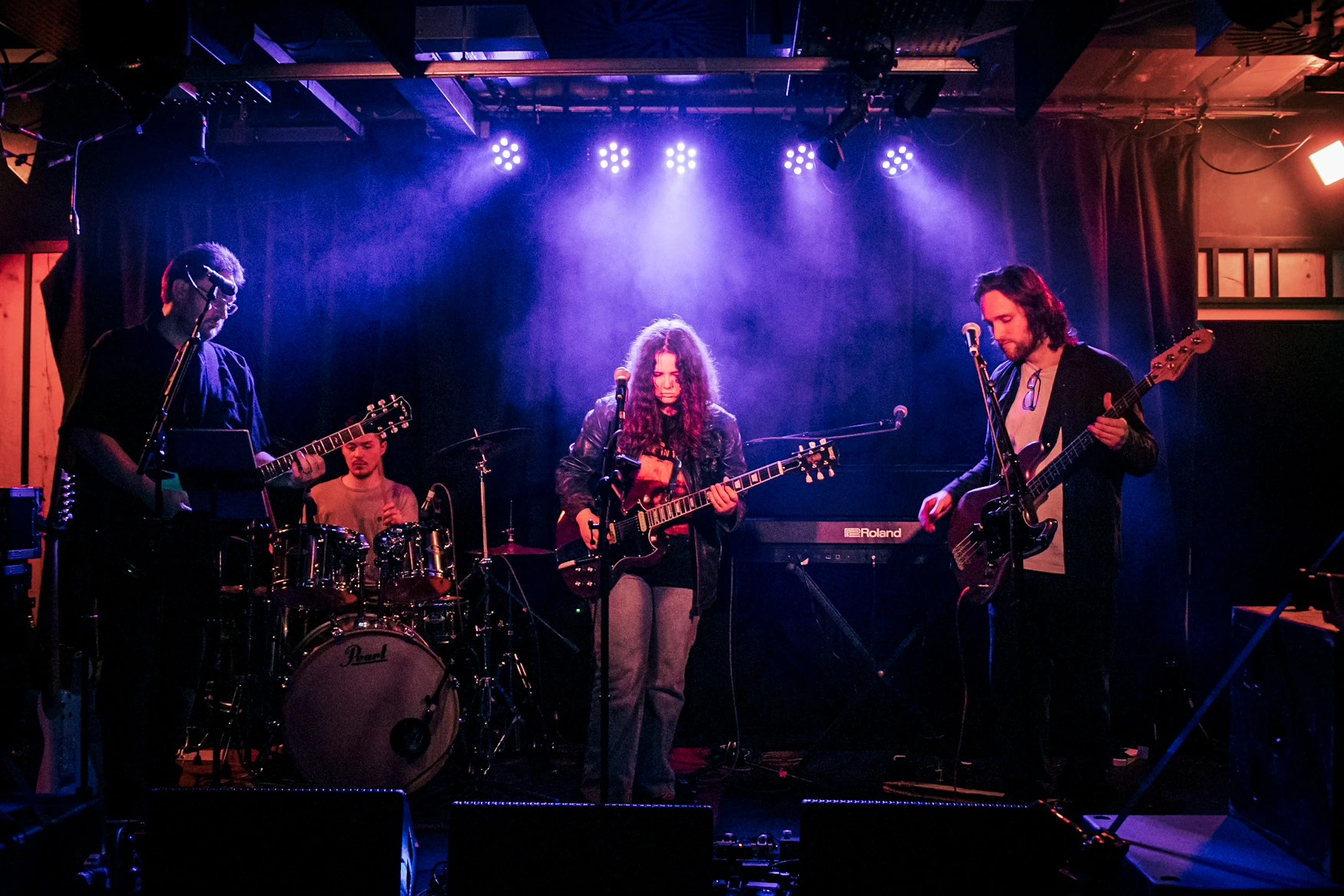
We played our first proper headline show last night. Twenty-two songs, ninety minutes, a support act, a videographer, a photographer, and a room that was about half full. It went brilliantly and it went wrong in ways we didn't see coming. This is what we learned.
Price Your Tickets Like They Matter
We charged £7. We ran a "2 for £10" deal. And we watched pairs of tickets get bought as goodwill gestures by people who never intended to show up.
At £7, the ticket costs less than a pint. There's no commitment behind that purchase. People buy it the way they buy a raffle ticket — nice thought, no follow-through. We had confirmed sales that simply didn't walk through the door because the price was too low to create any sense of loss.
A half-full room of committed people beats a sold-out spreadsheet with empty chairs every time.
Next time, it's £12–15. Fewer tickets sold, but more of those tickets will have actual human beings attached to them.
Assume Nothing
We sold enough tickets to fill the room. On paper, we were done. So we stopped advertising, eased off the promotion, and assumed momentum would carry us to a packed show.
It didn't.
Selling a ticket and getting a body through the door are two completely different things, and the gap between them is where your assumptions kill you. We assumed that a sold ticket meant a committed attendee. We assumed that "Interested" on Facebook meant something. We assumed that people who said "yeah, I'll be there" would actually be there. We stopped pushing because the numbers on the spreadsheet looked right.
The numbers in the room told a different story.
If we'd kept advertising through the final week, we'd have sold more tickets — and more importantly, we'd have sold them to people who were seeing the show for the first time and making a fresh, active decision to come. Late buyers are often your most committed buyers because the decision is immediate. They're not buying two weeks out as a vague intention. They're buying on Wednesday for Saturday because they've decided they're going.
Don't stop promoting because the maths looks good on screen. The maths only matters when you count the room at showtime. Keep pushing until the doors open.
Build the Audience First. Sell the Tickets Last.
This is the flip side of everything above. If early ticket buyers don't show up because the commitment was too far away and too cheap to care about, then the entire approach of selling tickets a month out is flawed.
Next time, the first three weeks of promotion aren't about selling tickets at all. They're about building awareness — video content, behind-the-scenes clips, short performances that get people watching, engaging, and talking. Nobody is being asked to buy anything. They're just getting to know the artist, hearing the music, and building a connection.
Then, in the final week, tickets go on sale to an audience that's already warm. They've seen the content. They know what they're walking into. The decision to buy isn't a vague "sure, why not" four weeks out — it's an active choice made days before the show by someone who's been paying attention and has already decided they want to be there.
The New Approach
Weeks 1–3: Build awareness. Content, clips, behind the scenes. No ticket sales. No asks.
Week 4: Tickets go on sale to a warm audience that's already decided they want to come.
Result: 100 tickets sold in 7 days puts more bodies in the room than 100 sold over a month.
The Break is an Exit Ramp
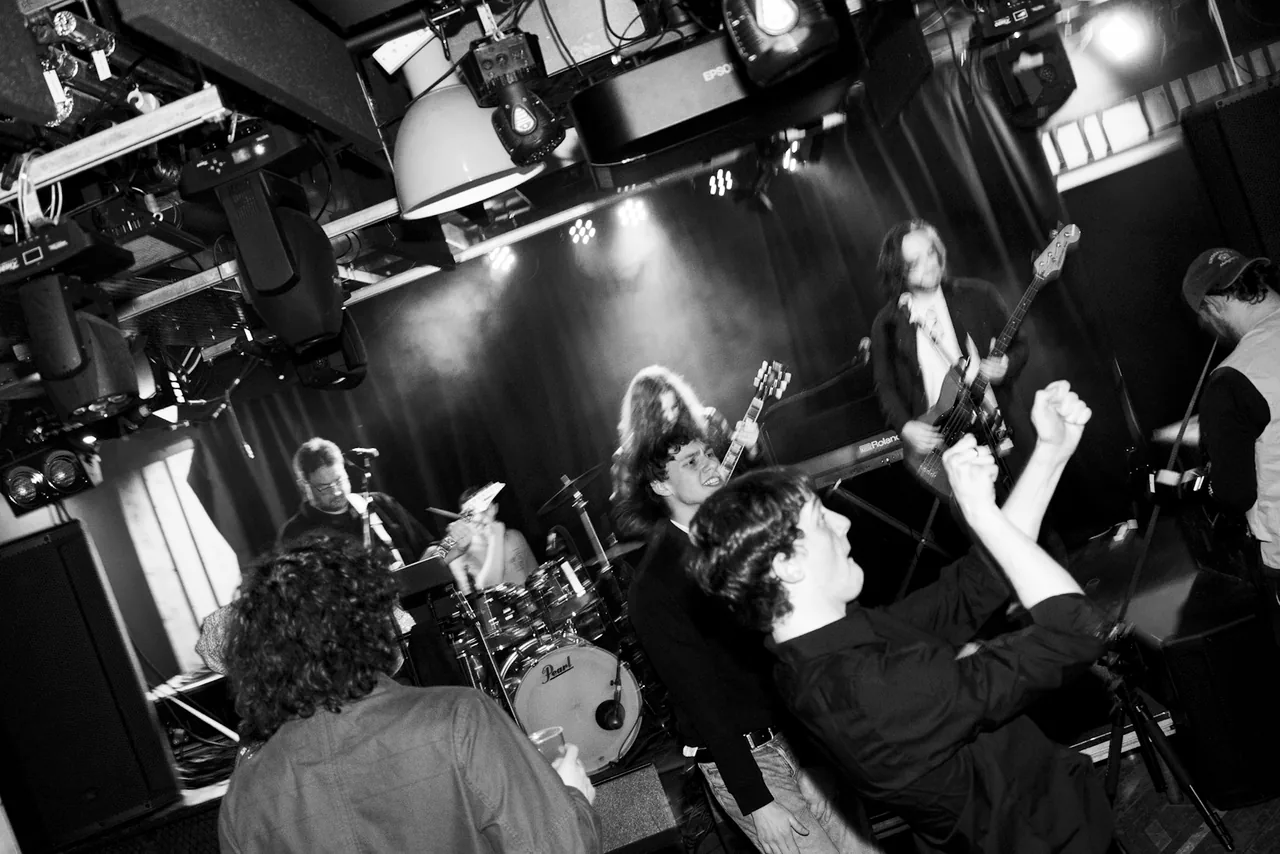
We played the first half electric, told the crowd "we'll be back in five minutes, grab a quick drink," and switched to an acoustic set. The acoustic set was stunning — genuinely one of the best things we've done. But by the time we came back, the room had gone from 50 people to 15.
In a small venue with a bar, a break gives people permission to leave. They step outside for a smoke. They get talking. They get another drink. The gravitational pull of the bar wins. They're not coming back because in their heads, they've already had a great night. Job done.
The fix is simple: no break. If your set needs a gear change or a mood shift, make the transition part of the performance. One musician keeps playing while others switch instruments. The energy dips but it never stops. The audience never gets a moment where nothing is happening.
Sixty minutes, no break. That's the rule for any room under 200 capacity.
Your Setlist is Too Long
Twenty-two songs felt like a statement. It was also about six songs too many. When you're planning a setlist at home, every song earns its place. When you're watching the room at 11pm, you can feel which songs are holding attention and which ones are letting people drift to the bar.
Be honest with yourself afterwards. If you can't immediately remember how the crowd reacted to a song, neither can they. That song gets cut.
We're cutting to 15–16 songs and grouping them into energy blocks — heavy songs flow into heavy songs, quiet songs flow into quiet songs, with seamless transitions inside each block. No count-ins, no "this next one is by..." — just one song bleeding into the next. You save 30–45 seconds per transition, the energy never drops, and the show feels like a single continuous experience.
The Encore is Real — If You Don't Ask For It
We finished our set at midnight. The band walked off. There were maybe six people left in the room. And those six people started chanting for more. Uninstructed. Unplanned. Genuine.
That moment is worth more than a hundred polite rounds of applause. We nearly didn't get it because we were afraid of the silence. We almost said "do you want one more?" from the stage, which would have killed it. Instead, we stopped, we walked off, and the audience filled the gap themselves.
Never ask for the encore. Build your setlist so the last song feels like a definitive ending. Walk off like it's over. If the audience wants more, they'll tell you. The silence between walking off and the crowd responding is terrifying. Let it happen anyway.
Nobody Cares About Your Facebook "Interested" Count
Forty people marked "Interested" on our Facebook event. Maybe ten of them showed up. Facebook "Interested" is the lowest-commitment action on the internet. It's one click, no cost, no obligation. It means "I acknowledge this exists."
Don't plan your evening around it. Don't budget around it. Don't tell the venue "we've got 40 interested on Facebook" because it means nothing. Count tickets sold and assume 70–80% of those will actually arrive. Everything else is noise.
Own Your Audio or Lose It
We were told by the venue: bring a memory stick for recording. We brought one. The sound engineer said: we can only record to a laptop. Nobody had a laptop. We scrambled. Someone downloaded a DAW they'd never used onto a borrowed computer. The room mic failed. We nearly lost the audio from our entire set.
The lesson: never rely on the venue for recording. Bring your own recorder — something like a Zoom H6 with XLR cables. Plug it into the desk yourself during soundcheck. Press record. Forget about it.
Three Audio Sources. Every Time.
1. Board feed — XLR into your own recorder. Plug in at soundcheck. Don't ask, just do it.
2. Room mic — captures crowd reactions, ambience, the actual feel of being there.
3. Camera mics — backup. If everything else fails, you've got something.
Carry Your Own Mics
Watch the support acts before you. Watch what happens to the vocal mic between sets. Multiple singers, lips on the grille, no cleaning. Now think about how many bands used that mic this week.
Buy two SM58s or equivalent. Label them. They go on the stand at soundcheck and come off at the end of your set. Nobody else uses them. This isn't diva behaviour — it's basic hygiene, and it's what every working musician who's been doing this for more than a year already does.
Bring Your Own Everything
Not every venue sells bottled water. And if the only option is tap water in a pint glass, that glass ends up on the floor next to your pedalboard. One kick from a moving bassist and you've got water in your electronics mid-set.
A case of bottled water in the van costs £3 and removes the problem entirely. Sports cap bottles, not open glasses. They sit on top of an amp, they don't spill, and nobody has to leave the building to find a shop between sets.
While you're at it, start writing everything down. Not a mental checklist — an actual physical list that lives in the gear case. Water. Mics. Recorder. Charged wireless units. Cables. Every problem that catches you off guard at a gig goes on the list, and you never solve the same problem twice.
The Room Was Half Full and It Was Still a Success
Here's the thing nobody tells you: your first headline show will probably not go the way you imagined. The room won't be as full as you hoped. Something technical will go wrong. Your setlist will be too long. You'll learn more from what went wrong than from what went right.
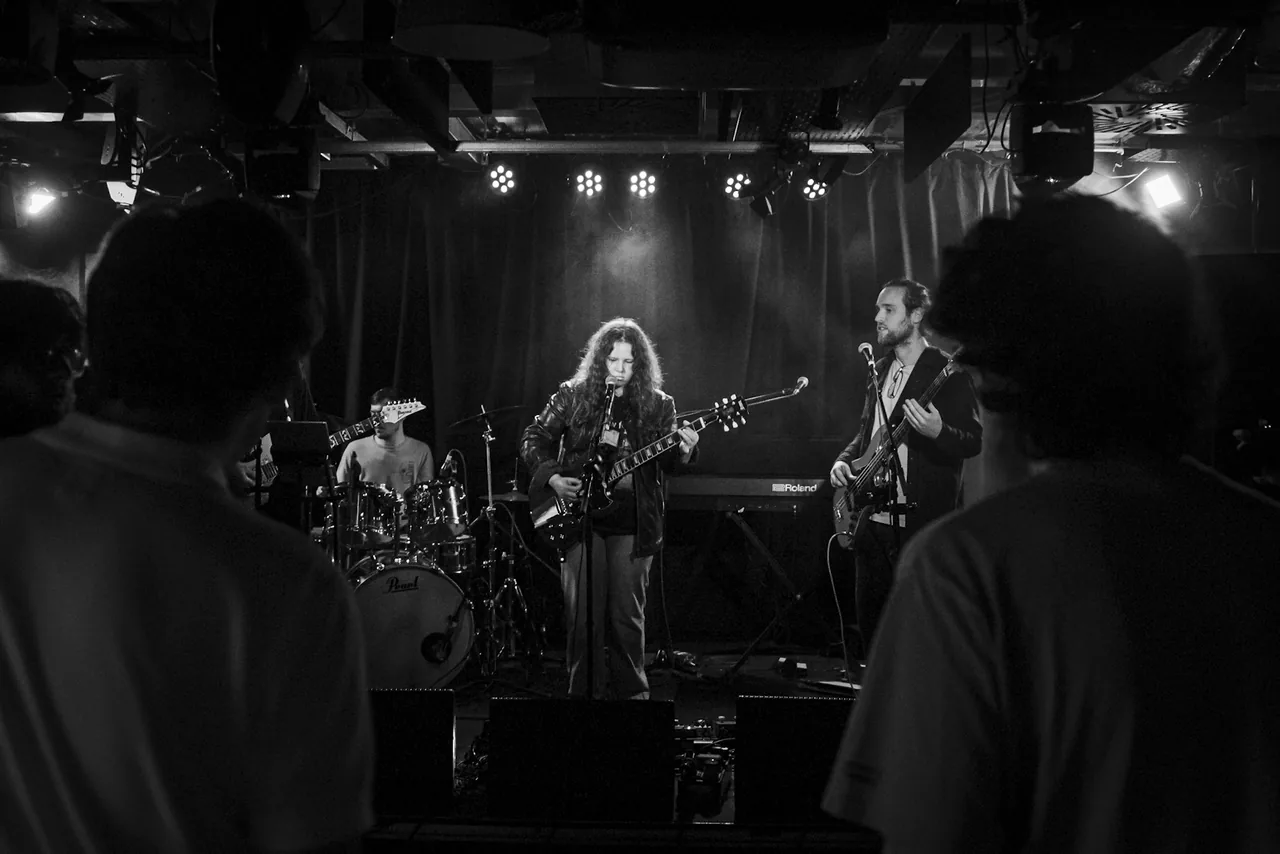
We had about 50 people in a 100-capacity room. The acoustic set was perfect. The encore happened naturally. Six strangers chanted for more at midnight. We know exactly what to fix for next time — pricing, set length, transitions, audio capture, load-in prep.
A half-full room with lessons you actually learn from is worth more than a full room where everything goes smoothly and you learn nothing.
Write it all down while it's fresh. Be honest about what worked and what didn't. Then fix it and play the next one.
What's next
Why We Started Playing Weddings (And Why It Took Us This Long)
We didn't plan this. Then someone who'd been at a gig asked — not for a wedding band, but for what we did on Saturday night, at their wedding.
Read nextMiabella's next show is at Oh Yeah Centre, Belfast. Tickets at miabella.uk
Miabella is a rock band from Northern Ireland, fronted by 17-year-old guitarist and pianist Mia Nesbitt. Their 2026 tour includes Oh Yeah Centre, Black Box, The Portico, and Belfast Barge. Learn more at miabella.uk
#IndieArtist #MusicBusiness #DIYMusician #LiveMusic #NorthernIreland #FirstGig